Features
Share the fight, keep your secrets
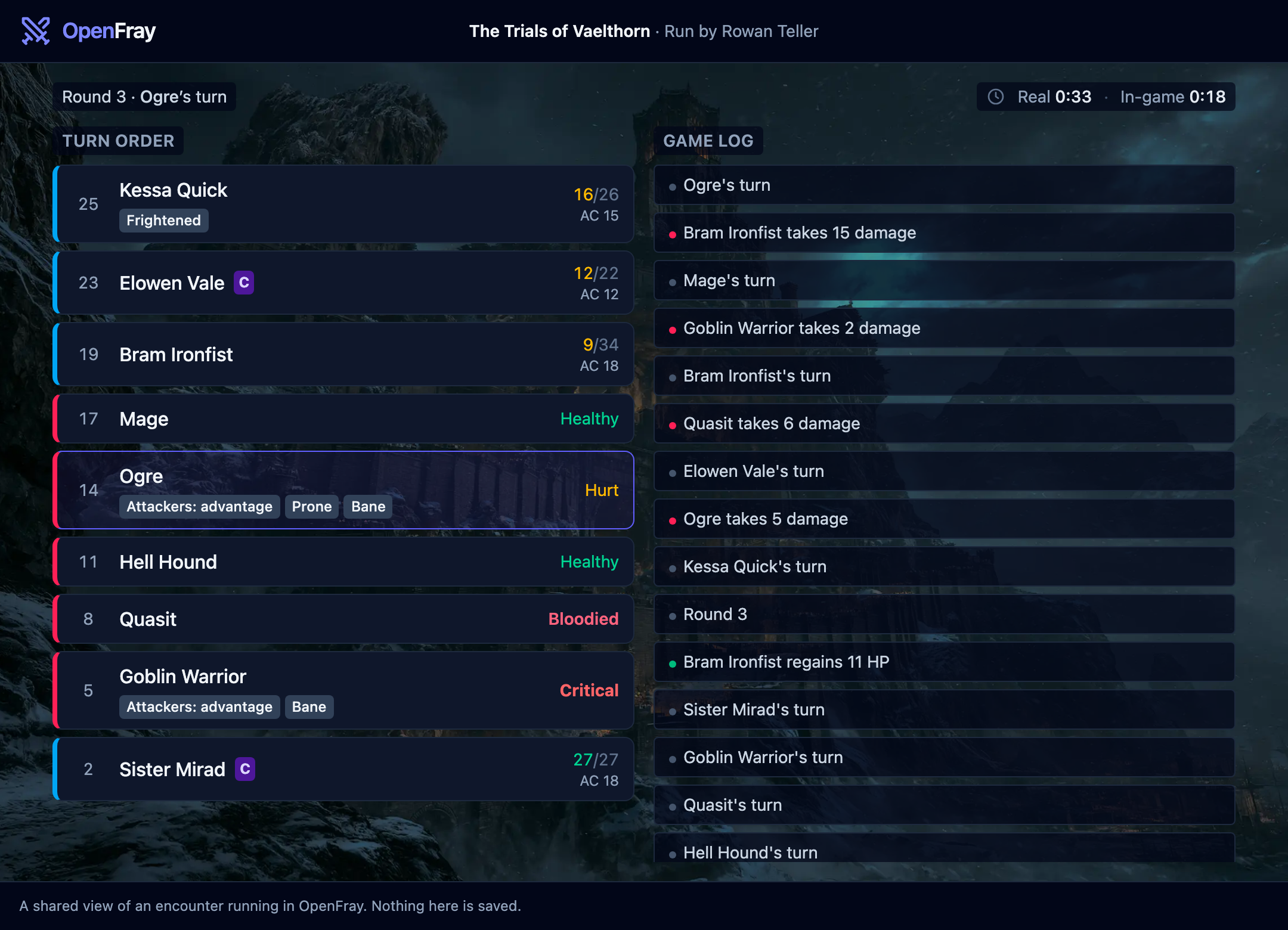
Your table follows the fight on their own phones: who's up, what's ticking, how hurt that Ogre looks. What each creature gives away is your call, down to the hit points.
Your call
You choose what they see
Every disclosure is a setting, per fight: how hit points read, whether armor class shows, whether the dice travel with the rolls. The same rows, at each level you might pick:
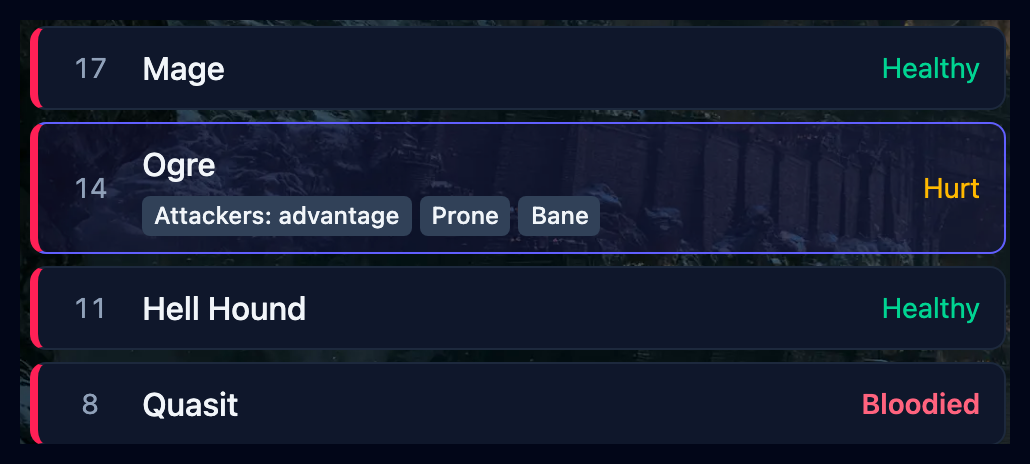
Hurt, Bloodied, Critical
The default: your creatures give away how the fight is going, never the arithmetic. The Ogre reads Hurt and keeps its 44/68 to itself — and its effect chips still show, because the table saw the spells land.
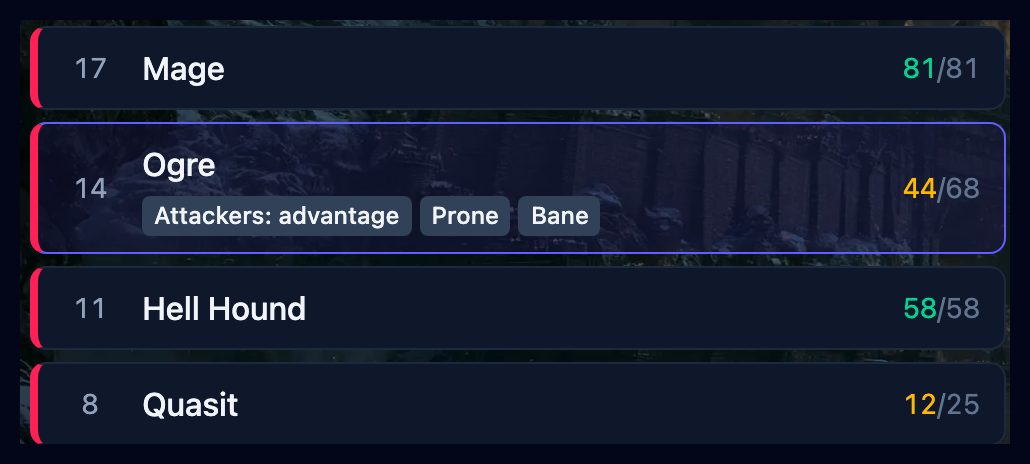
The same rows, arithmetic included
Some tables like the numbers on the table. Flip one setting and the same rows read 44/68 and 58/58 — nothing else changes, and you can flip it back mid-fight.
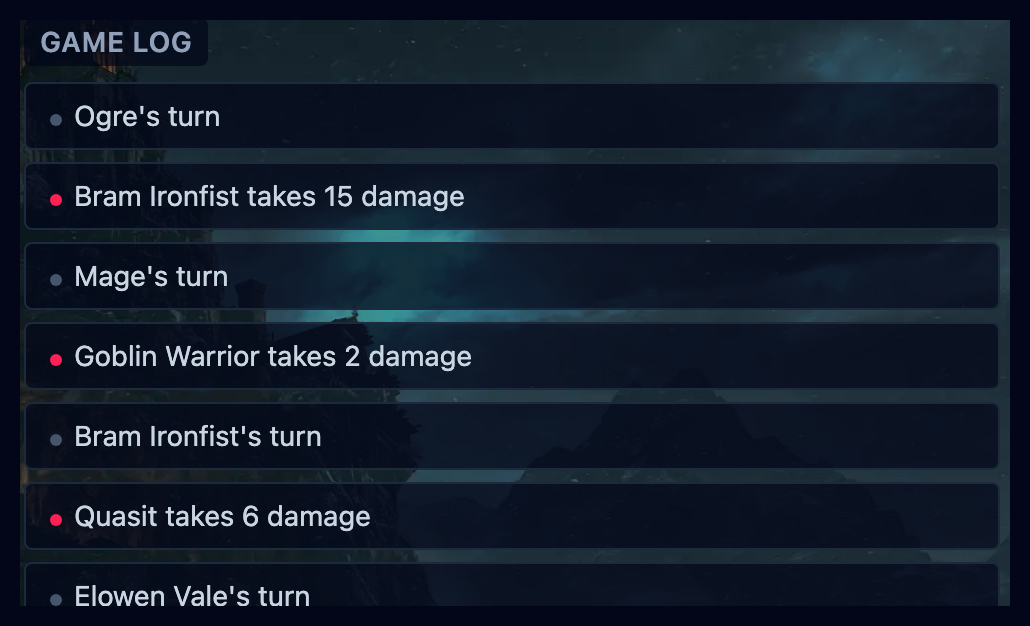
Events, not dice
Their log follows the fight — turns, damage, conditions — without the breakdowns your side keeps. What the table learns is what happened, not what you rolled to make it happen.
Nothing to hand out
One link is the whole setup
Live on their own phones
Share one link. The turn order, conditions, and log follow the fight on every screen as you run it, so nobody asks whose turn it is.
Read-only by design
There is nothing on it to press. Players watch the fight; they can’t poke it, and there are no player accounts to manage.
Stored nowhere
It works without an account, yours or theirs. The board goes straight to their screens over a live channel and is kept nowhere — stop sharing and it’s gone.
Lock it with a PIN
Set a four-digit PIN and the link alone isn’t enough — a screen without the PIN has nothing to read the board from, not a blocked view of one.
A backdrop, if you want one
Set the mood with art behind the board — a mountain fortress, an elven city, a frozen lake — in light or dark, whichever the table’s theme is running.
Headed with your campaign
Signed in, the screen can carry your campaign’s name and yours as the Game Master running it — off by default, and never on an anonymous view.
A shared tablet can leave players’ phones free for their character sheets. See my player-facing tablet setup and how it helped me run faster fights at an in-person table.
In the handbook