Features
Every roll, already worked out
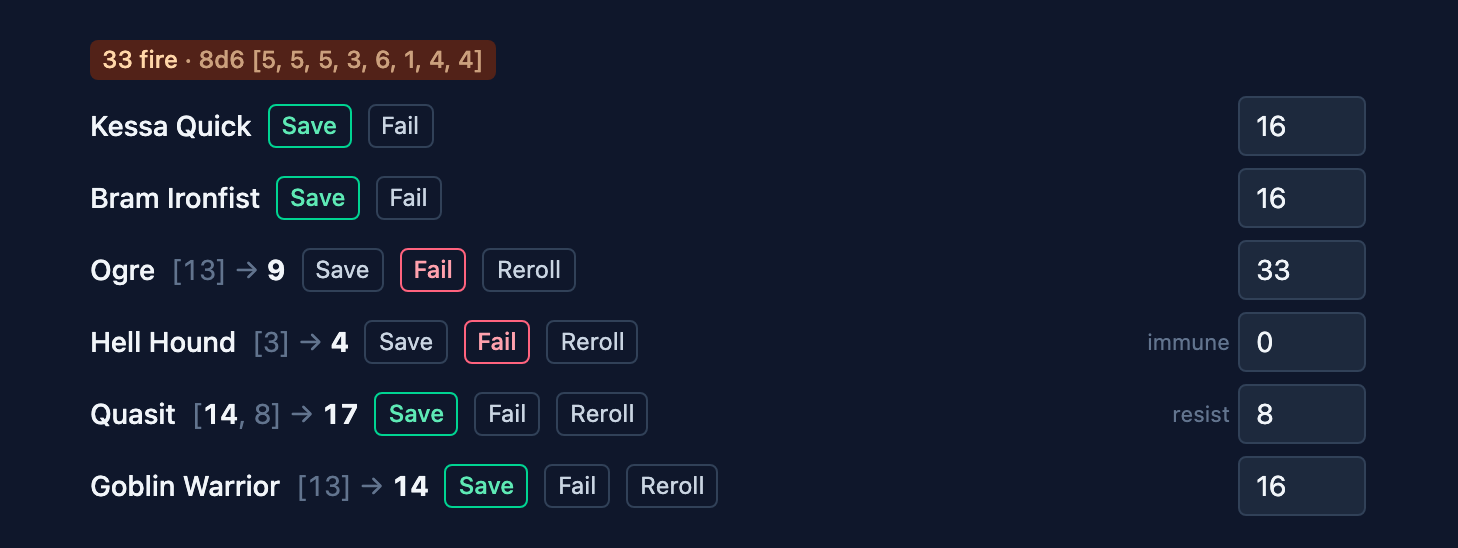
One spell hits six creatures. OpenFray rolls all six saves, applies each one's defenses, and hands you the damage — one click, done. That moment is why this page exists.
Group saves
Six rows, every defense applied
Every row prints its reasons. The Goblin Warrior rolled a 2, so all 32 waits in its box. The Hell Hound saved — and immunity zeroes it anyway. The Quasit's Magic Resistance rolled two d20s and kept the 19, and resistance cuts its half again, down to 8. The made saves take 16.
Your players roll their own saves at the table. Their rows take a Save and a Fail button instead of dice — Kessa and Bram called theirs, and the 16 followed the click.
Casting
The whole spell, one card
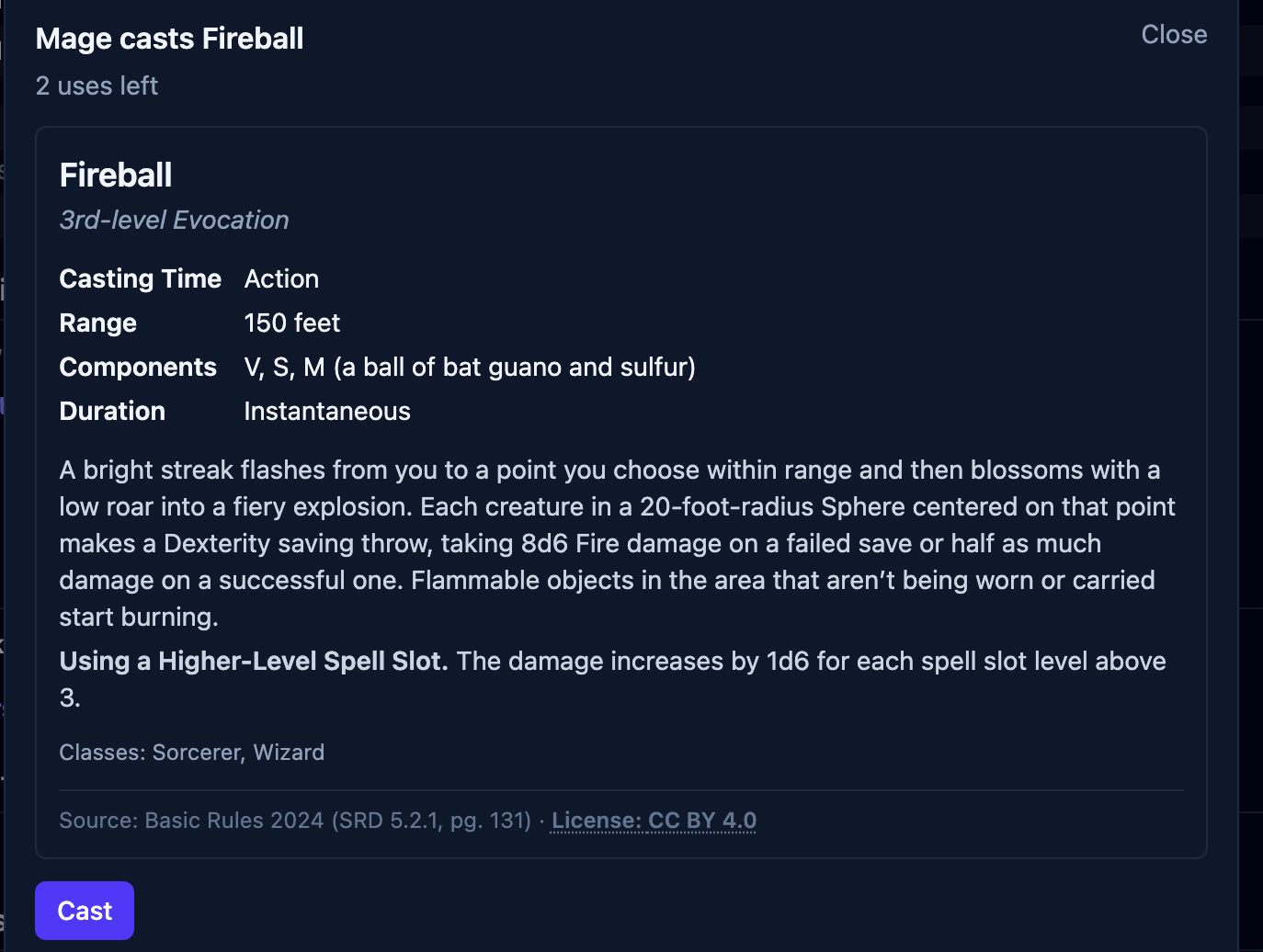
Casting from a stat block opens the full card: range, components, duration, and the rules text, with the creature's remaining uses counted beside it. Cast, and the save rolls for every target at once — the group save above is this card, one click later.
The rules, respected
What a roll takes with it
- 1The attacker's own numbersClick an attack on a creature's stat block and it rolls with that creature's numbers: its attack bonus, its damage dice, the crit applied. Nothing is typed twice.
- 2The effects on the boardAdvantage, penalties, and conditions ride into the roll from either end, the way the tracking page tells it. Faerie Fire on a foe arms everyone who swings at it.
- 3Your result, if you prefer itEvery roll can be typed instead. Real dice at the table stay in charge; OpenFray does the arithmetic around whatever you hand it.
- 4Honest dice, written downA cryptographic generator, every number equally likely, no streak correction ever — and the log keeps each roll with the dice behind it.
In the handbook