Features
The board that remembers
Your tracker knows the hit points. The fight is decided by everything else — who is concentrating, who has advantage on whom, what ends at the start of whose turn. OpenFray holds all of it, and works it into the rolls.
Two ends
Every effect knows whose roll it touches
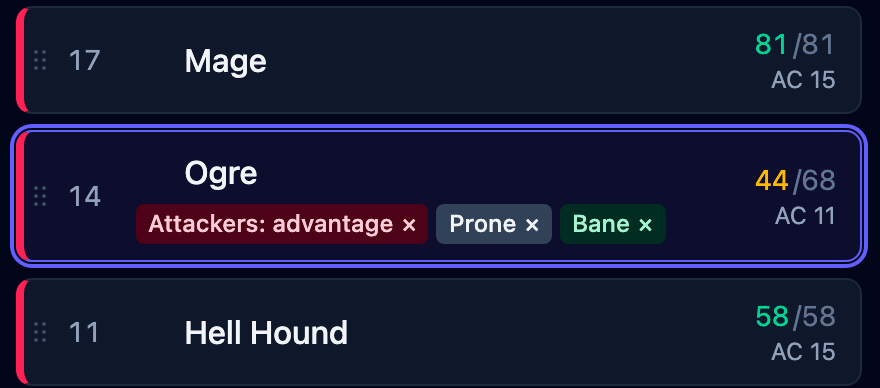
The cleric drops Bane on the Ogre; the wizard paints it with Faerie Fire. Two badges, straight from the spell cards — and each one fires on the right roll, from its own end.
- Outgoing. Bane rides the Ogre's own attack rolls and saving throws, subtracted where it rolls.
- Incoming. Faerie Fire arms everyone who swings at it — the Advantage is theirs, and nobody has to be reminded.
The receipts
The log shows its work
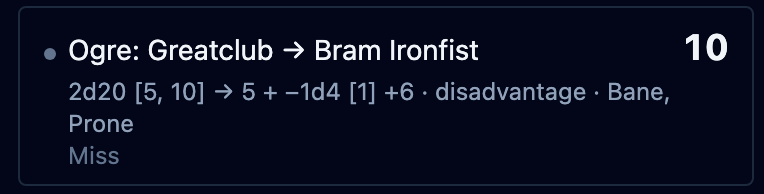
Every roll is kept with the dice behind it: both d20s and which one counted, the Bane d4 coming off, the total against the armor class. When someone asks how the club missed, the answer is one entry — a 20 sat wasted while Prone kept the 12, minus the Bane, plus 6: 14 against AC 18.
Three hours in, nobody re-litigates a ruling. The log remembers who had what, and when it ended.
One turn, held together
What runs by itself
- 1The turn startsSave-ends effects keyed to the start roll themselves. Recharge rolls. Durations tick.
- 2The creature actsEvery roll carries the effects that touch it, from either end, automatically.
- 3Damage landsIf the target was concentrating, the check is offered on the spot — DC worked out, both answers one click.
- 4The turn endsEnd-of-turn saves roll, timed effects count down, expired ones clear.
- 5The log writes it downEvery change lands in the game log, grouped by round, with the dice behind it.
No sticky notes
Everything on the board says when it leaves
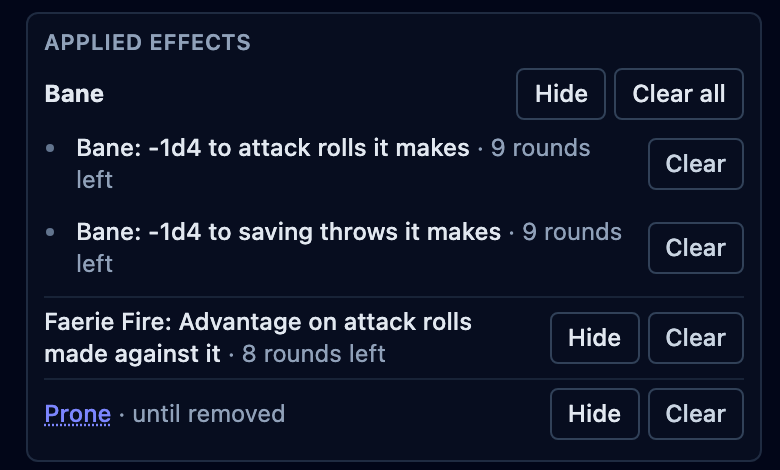
Bane has 9 rounds left. Faerie Fire has 8. The Prone stays until someone stands up. Every effect on the board carries its own clock, ticks with the turns, and clears itself — no sticky note survives three rounds past its spell.
Clearing one early is the button beside it. The board never argues.
The rest of the memory
What else it keeps hold of
Resources count down
Legendary actions and resistances, recharge abilities, spell slots, limited uses, reactions — all tick as you play, so the mage's last slot is a fact, not a guess.
Reminders, not rulings
OpenFray surfaces what has to be remembered this round and takes a typed result anywhere. The judgment calls stay yours.
Rests restore the right things
A short or long rest restores what the rules say, clears what should end, and keeps what should not.
Presets
Your table's effects, bottled
An effect is rarely alone: the spell that frightens also reminds, carries a counter, and dents a stat. OpenFray stages the whole package and applies it as one badge — and named, it becomes a preset your table reuses for the rest of the campaign. The barbarian's Reckless Attack is the classic one to save.
Pick the conditions
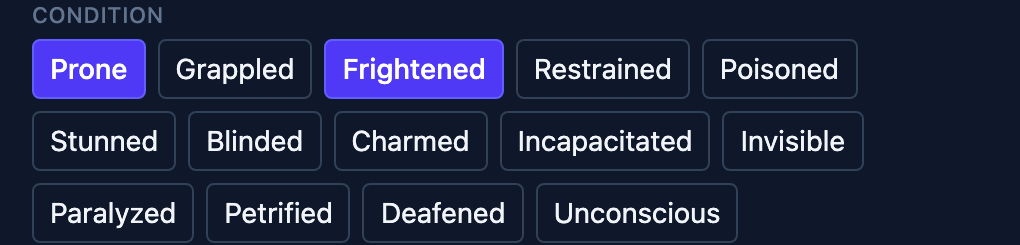
The form opens on the board’s own state — the Ogre arrives already Prone — and Frightened joins with a click. Every chip is the rules list’s own, so the badge that lands means exactly what the book means.
Price the damage
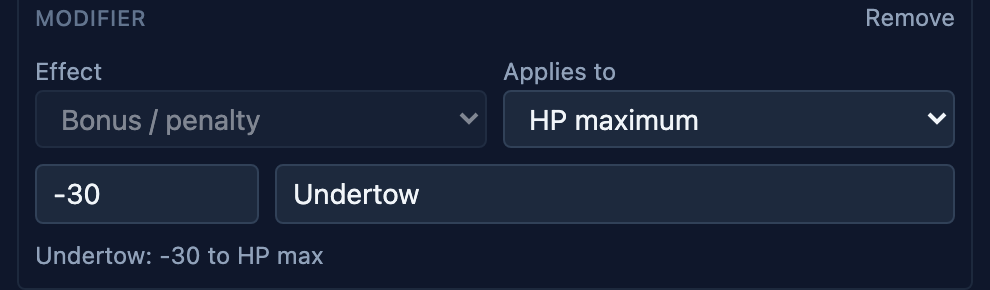
A bonus or penalty, aimed where it belongs: −30 to the hit point maximum here, or to the rolls a creature makes, or to the rolls made against it. The label keeps the cause attached, so three rounds later nobody asks where the −30 came from.
Keep a secret
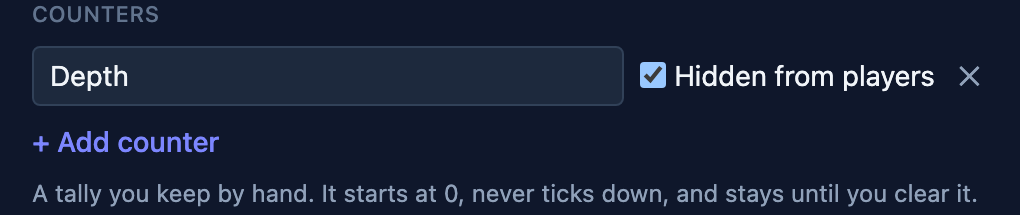
A counter tallies what only you should watch — how deep the current has pulled them. Marked hidden, it never reaches the player view: it starts at 0, ticks only when you say, and stays until you clear it.
Name the bundle
Named “Undertow”, the whole stack — conditions, reminder, counter, penalty — lands as one badge and clears together when the effect ends. Left blank, each part stands alone instead. The named ones become the presets your table reaches for all campaign.

In the handbook